We were delighted when first knowing about Istanbul based Center for Spatial Justice’s work, as we felt to be kindred spirits. Mekanda Adalet Derneği – the Center for Spatial Justice, short MAD, combines activist research, participatory practice, and critical education, to create fairer, more democratic, ecological urban and rural spaces; to combine cross-disciplinary academic with resident’s and social movement’s knowledge, and to gather, accumulate and share this knowledge and make it accessible to the public. MAD collaborates with communities in Istanbul and beyond, with urban social movements, environmental justice groups and local governance actors, in struggles for the rights of dispossessed / endangered urban communities and against capitalist urban transformation projects. In this way MAD acts as a watchdog over the crimes against the city and nature and as a democratic bridge between local spatial needs and cross disciplinary expertise. MAD carries out ‘action research’, ‘planning with people’ workshops and ‘design and build’ projects, and publishes the print and online journal beyond.istanbul.

Furthermore Beyond office offers an ideal space for architects, planners, designers, researchers, journalists, social scientists and artists interested in the issues of spatial justice and hosts the Spatial Studies Library, in which, we are happy to announce, Not-an-Atlas is accessible to the Istanbul public.
MAD also works a lot with mapping-tools. The issues and processes mapped resemble some of the contributions in Not-an-Atlas or that kollektiv orangotango is involved in:
- inner-city gentrification in Beyoğlu, Istanbul and the struggles against it – our map Aufwertung Verdrängung und Widerstand in Kreuzberg
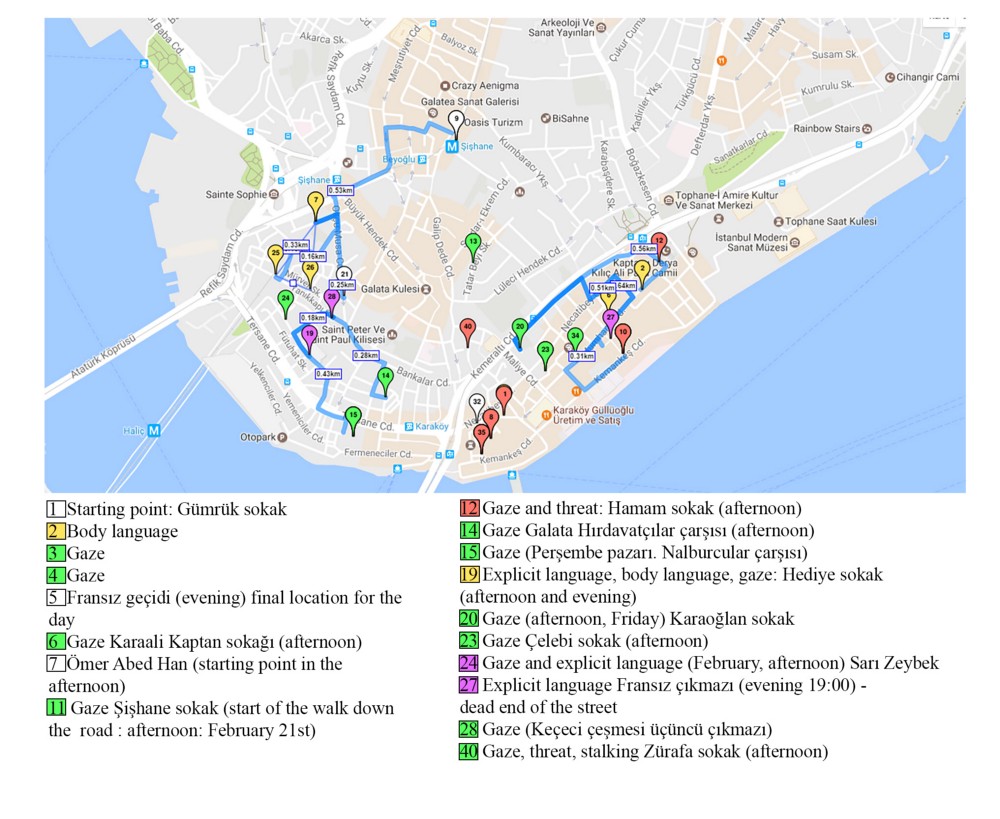
- mapping gendered spaces in Karaköy, Istanbul – Harrassmap Project’s mapping of Sexual Harassment in Egypt
- before-and-after mapping of urban megaprojects with satellite imagery – Imaginando Buenas’ contribution to Not-an-Atlas, using aerial imagery as a critique tool.
We are happy to have Not-an-Atlas present in MAD’s Spatial Studies Library, looking forward to stay in contact with MAD, to exchange experiences and support each others activities.