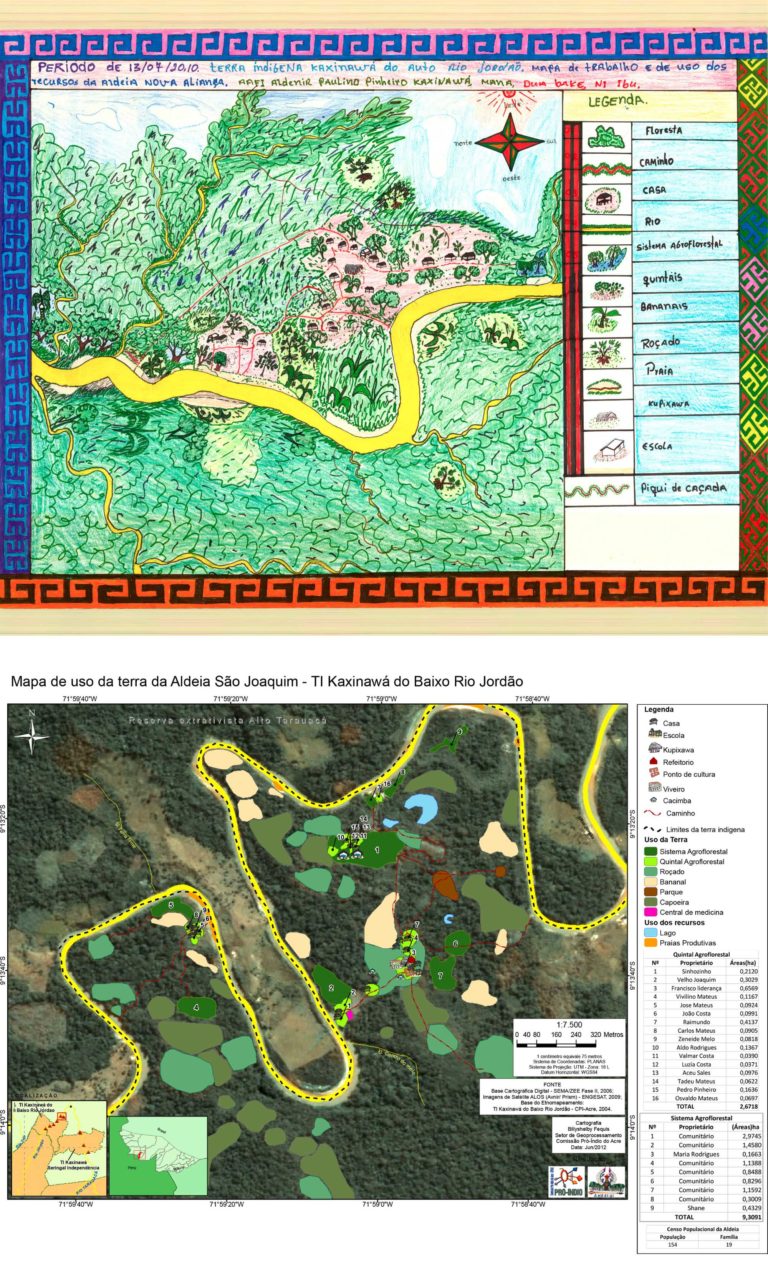
“The map is the mirror of our community, it serves to show what we learn and helps in understanding the territory.” IAAFs Raimundo Kaxinawá, 20081 The experience reported here refers to the Pro-Indian Commission of Acre (CPI / AC), which has been working to produce “Indigenous Cartography” with Indigenous Agroforestry Agents (IAAFs) as a means […]
Militarization of Rio de Janeiro’s Favelas
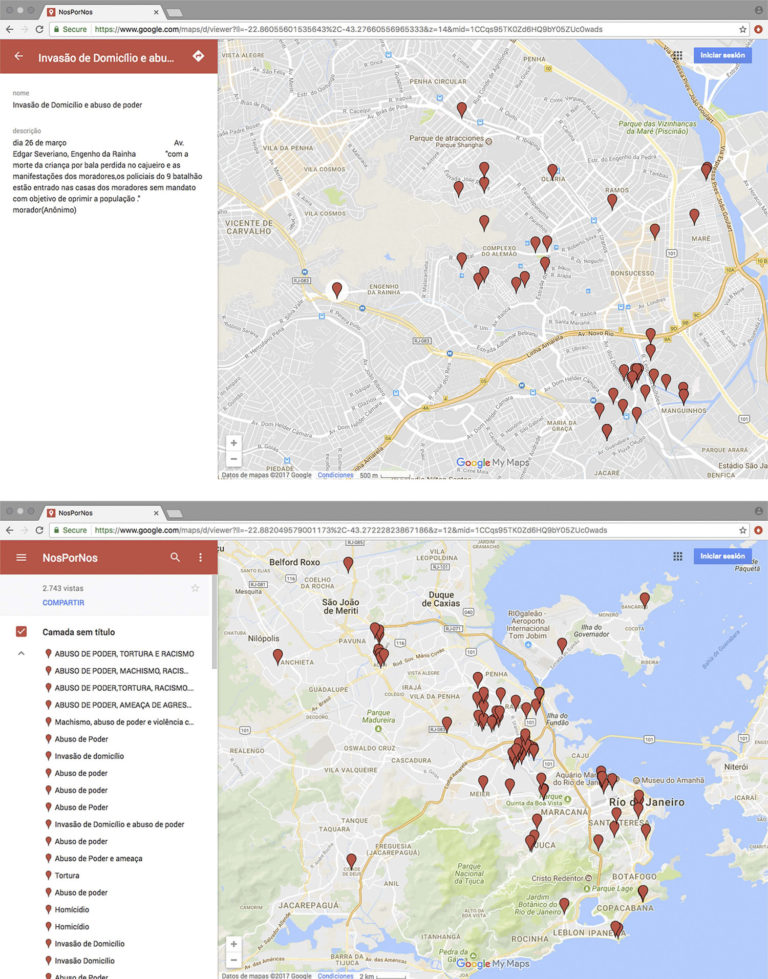
A young woman, identified only as Carolina, was going to school when the police raided her house. Grassroots communicators were violently prevented from doing their work and recording police operations in the favelas occupied by the Pacifying Police Unit (UPP) in Rio de Janeiro, which is a sign of the criminalization of social movements and […]
Political Action Maps
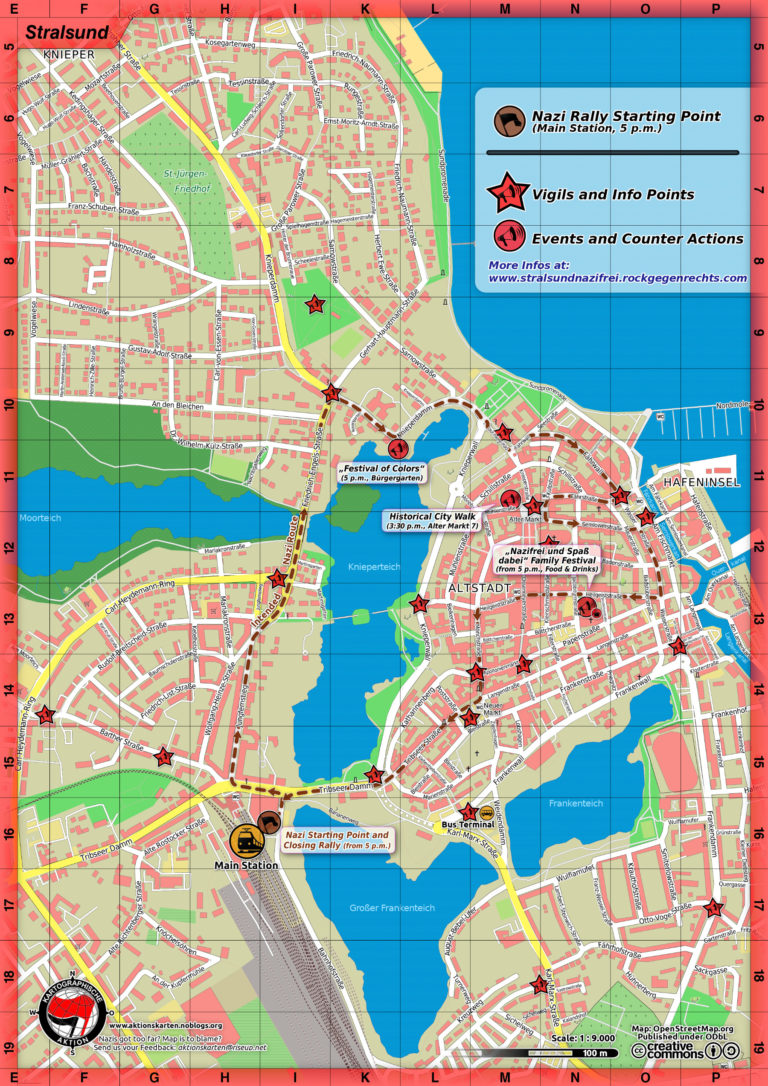
Social movements often take place in public space: during demonstrations and other political actions people move along streets, paths and sometimes cross-country. Often, when we want to reach places, we are denied entrance. And only rarely do we have the opportunity to protest on familiar terrain close to our homes. Thus, the need for maps […]
Making Cartographies of Ourselves
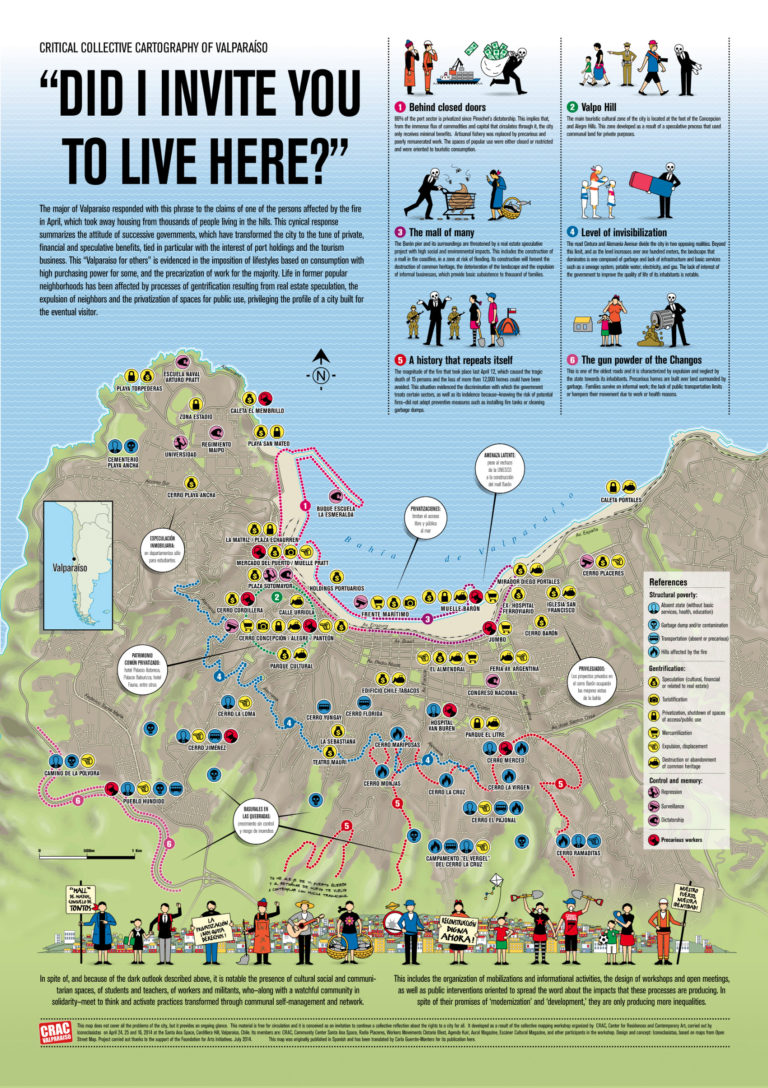
“Social ecology will have to work towards rebuilding human relations at every level of the socius.” Félix Guattari, The Three Ecologies In April 2014 one of the last great urban-rural fires took place in the city of Valparaiso, Chile. This fire consumed neighborhoods in which more than 3,000 people lived. A few days after the […]
Mapping Safe Passages
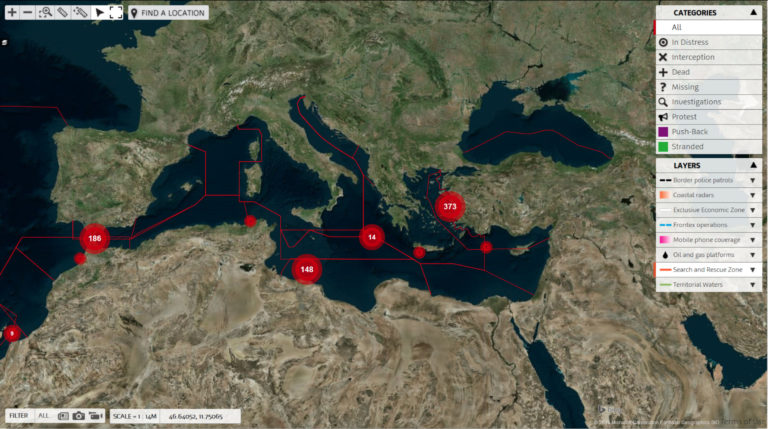
During the long summer of migration in 2015, the importance of digital tools for transnational movements of people has been widely acknowledged. While states have been using geographical information and maps to control movements of people across space for a long time, transnational migrants and support network have found creative ways of using online mapping […]
- « Previous Page
- 1
- …
- 15
- 16
- 17
- 18
- 19
- 20
- Next Page »